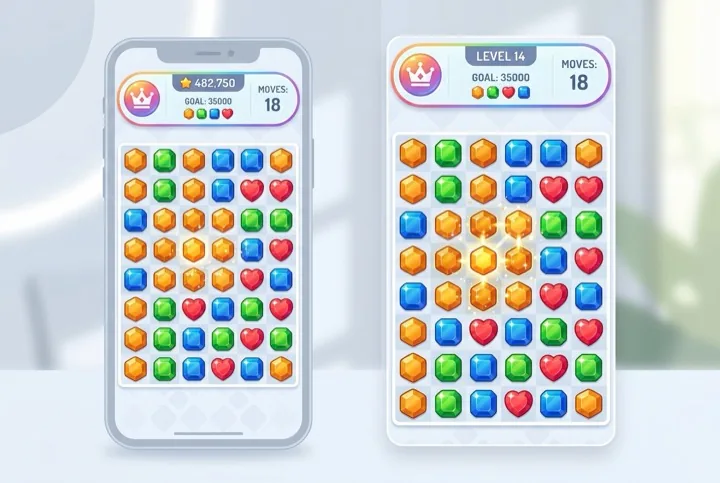
Puzzle mechanics
Designed for fragmented free time, these applications feature forgiving learning curves and quick turnarounds. Success hinges on consistently clever stage construction to stand out in a saturated marketplace.
Our editorial team dedicated a full quarter to evaluating bespoke mobile gaming firms. After rigorous hands-on testing of live products, we isolated the five most dependable partners for your next venture.

At its foundation, a mobile game is a piece of interactive software designed explicitly to entertain through a responsive feedback mechanism. The player faces an obstacle, inputs an action, and the system instantly reacts. All peripheral components—menus, storefronts, loading screens—serve only to facilitate this central interaction. Built using either native languages or cross-platform engines, these programmes are distributed via major digital storefronts, relying on a combination of local storage and cloud synchronisation.
When viewed through a developer's lens, games present entirely different challenges compared to utility software. They demand constant graphical output, which aggressively drains hardware resources. They also require the management of massive files, forcing teams to devise clever strategies for initial download thresholds. Additionally, the backend architecture must support persistent player profiles, competitive rankings, and dynamic events. Standard web agencies rarely comprehend the sheer scale of these architectural requirements.
From a business perspective, everything revolves around player stickiness. Driving initial downloads is merely the first hurdle; true profitability stems from retaining that audience over extended periods. Consequently, elite development firms obsess over engagement metrics rather than just visual polish. Our evaluation framework deliberately heavily weights a studio's track record of maintaining active communities over years, rather than days.
A crucial litmus test before commencing any commercial discussions: try summarising the opening sixty seconds of your game in three sentences. Should this prove difficult, your foundational concept needs work.
Designed for fragmented free time, these applications feature forgiving learning curves and quick turnarounds. Success hinges on consistently clever stage construction to stand out in a saturated marketplace.

Distilled down to a solitary action requiring only a thumb. Market viability is typically proven through marketing campaigns before production even concludes, with monetisation relying heavily on video interruptions.

Demanding sharp responses and featuring punishingly fast reset loops. Any dropped frames will infuriate your user base, meaning underlying code efficiency is absolutely paramount.
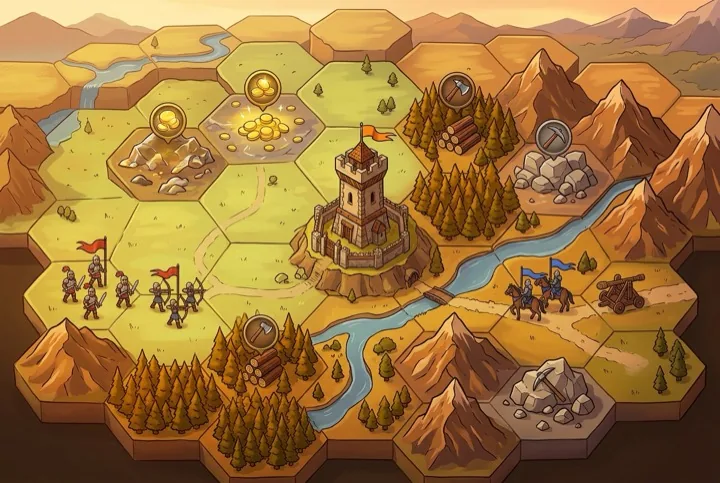
Characterised by lengthy playtimes and intricate supply chains that require meticulous tuning. While upfront development costs are steep, these formats consistently yield the most lucrative long-term audiences.
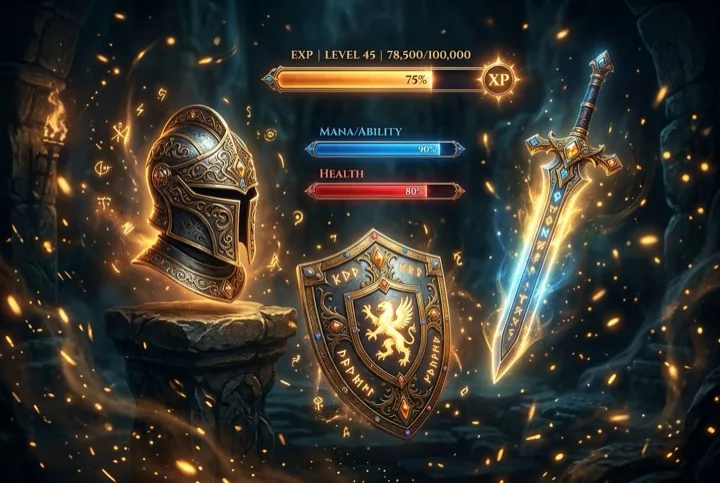
Centred around character growth and intricate storytelling. Building these requires a significant commitment to world-building, scriptwriting, and a relentless schedule of future expansions.

Bridging syllabus requirements with gamified elements, targeting classroom or parental budgets. Development mandates rigorous data protection standards and intuitive interfaces for younger users.
Building a game allows companies to tap into a massive, highly engaged demographic that rarely interacts with traditional corporate software. By gamifying interactions, you bypass dry instructional material and foster daily habits. The performance of these products is entirely transparent: data clearly indicates whether your audience is hooked or heading for the exit. Whether you are an independent publisher or a major enterprise, the goal is identical. You are acquiring ongoing mindshare, assuming you construct a compelling loop and hire a technical partner prepared for the rigorous realities of live operations.
Smartphones are universally adopted entertainment hubs. The platform ecosystems solve your initial visibility problems; your task is purely focused on retention.
Telemetry surrounding drop-off points and session frequency instantly validates your core mechanics, offering a speed of feedback unseen in other sectors.
From premium unlocks to microtransactions and sponsored placements, the commercial structure can be customised—provided it is woven into the foundational design.
Users actively participating in a branded universe form significantly stronger memories than those passively consuming traditional media campaigns.
Individual studios might use different jargon, but the underlying methodology is universally applicable. Insist that any shortlisted candidate outlines exactly who handles each of these six phases within their organisation. Evasive responses regarding ownership should be considered a major red flag.
An initial month dedicated to outlining the primary interaction model, identifying the ideal devices, and finalising how the app will generate income. Unproven ideas must be mocked up now.
Locking down the visual identity alongside the overarching progression systems. Altering course is still relatively inexpensive here, making it the final window for major creative pivots.
The bulk of the timeline, where programmers, animators, and sound designers work concurrently. You must demand access to updated, testable builds at the conclusion of every development sprint.
Subjecting the software to hundreds of handsets to identify memory leaks and logic errors. Crucially, mathematical adjustments to the game's difficulty are finalised using empirical player data.
Navigating the bureaucratic hurdles of app store approvals and orchestrating regional soft launches. Absolutely no marketing spend should occur until all telemetry systems are verified active.
The perpetual cycle of releasing fresh challenges, tweaking variables, and addressing server stability. Neglecting this phase guarantees your user base will migrate elsewhere within weeks.
Our evaluation process heavily penalises teams that fail to meet these specific benchmarks. All of these factors can be observed in a studio's previous releases, allowing you to audit their competence before signing a contract.
Your invoice is determined by feature density rather than broad category tags. We compiled the following pricing tiers during our latest round of audits, reflecting current Australian market rates (AUD). These brackets include all graphical creation, coding, bug hunting, and final deployment. You must also reserve roughly twenty per cent of this capital annually to fund essential post-launch maintenance.
Budgets generally explode for two reasons: integrating real-time player interactions that require robust server architecture, or requesting hundreds of bespoke character models. When funds are tight, always opt for a shorter, highly polished experience rather than gutting the testing phase to afford more levels.

| Project Scale | Typical Deliverables | Expected Outlay | Duration |
|---|---|---|---|
| Entry-level | A solitary gameplay loop, flat artwork, local processing only, ad integrations, and a finite stage count. | AUD $35,000 to $80,000 | 2 to 4 months |
| Mid-market | Tiered reward structures, digital storefronts, account synchronisation, temporary events, and bespoke illustrations. | AUD $80,000 to $200,000 | 4 to 8 months |
| Enterprise | Synchronous server combat, fully rendered environments, administrative panels, and simultaneous multi-device launches. | AUD $200,000 and above | 8 to 18 months |
You must be 18 years or older to access this website.
 Koda
Technical advisory bot
Koda
Technical advisory bot